Phil Burbank–Peter Gordon: From Bullying to Intimacy and Deception
The Power of the Dog (Thomas Savage Edition)Phil Burbank and Peter Gordon begin as adversaries: Phil ridicules the boy’s perceived softness, exposes him to the ranch hands’ scorn, and angrily expels him from Phil’s Swimming Hole. Their relationship then changes through Phil’s offer of a handmade rawhide rope and a place in ranch life. The resulting mentorship becomes emotionally intimate, but it is also shaped by Phil’s effort to isolate Peter from Rose Gordon Burbank—and by Peter’s concealed knowledge of how the rope can be used against Phil.
Hostility and the first breach
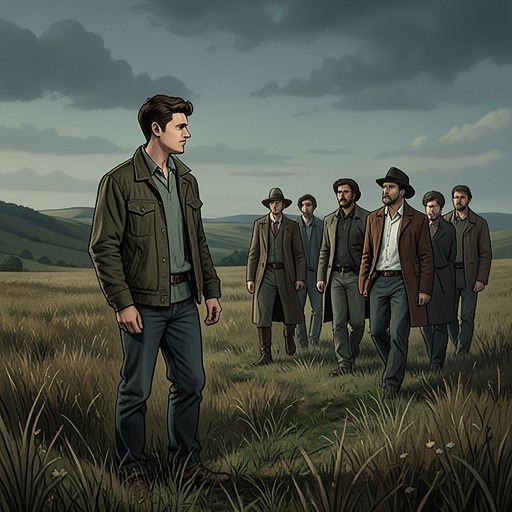
Phil’s contempt for Peter is visible before the boy arrives at Burbank Ranch. To prepare the ranch hands for the summer visitor, Phil describes Peter as bookish and feminine, emphasizing his confinement with books and pictures, his paper flowers, and his difficulty fitting into boys’ games. These stories prime the men to treat Peter as an outsider. Phil’s hostility is not merely private dislike: he supplies the language through which the ranch community judges the boy.
The encounter at Phil’s Swimming Hole makes that antagonism personal. The secluded place, hidden among willows and precious to Phil as a private refuge, is one of the few parts of his life he considers entirely his own. When he discovers Peter there, he reacts with shock and anger, shouting at him to leave. The outburst exposes how fiercely Phil guards the place, but it also establishes an imbalance between them: Phil can use his authority and physical presence to drive Peter away, while Peter’s intrusion has been brief and apparently unintentional.
Later, Phil watches Peter cross the open area among the tents in new clothes. The ranch hands whistle at him, and Rose and George are present but do not stop the insult. Phil recognizes Peter’s courage in continuing past them rather than retreating. That recognition does not immediately end the hostility; instead, it gives Phil a new idea. He imagines drawing Peter away from his mother, making himself the boy’s male friend, and allowing Rose’s drinking to deepen until George sees it as a failure of their marriage. The proposed friendship therefore begins as a scheme with consequences Phil expects to exploit.
The rope as invitation and instrument
Phil’s braided rawhide rope gives his plan a tangible form. As he works, he watches Peter and decides that the unfinished object can serve as a bond between them: he will give it to the boy and teach him to rope and ride. When Phil tells Peter that they started badly and suggests they might become good friends, Peter responds cautiously, still addressing him formally. Phil asks him to drop the formality, then points out when Peter finally calls him Phil. The small change in address marks a step toward closeness, but Phil has deliberately prompted it.
The offer is specific rather than abstract. Peter is to receive the rope, learn how to use it, and acquire practical skills suited to ranch life. Phil presents these lessons as a way for Peter to enter the local world and feel less alone. He also shares memories of earlier days and of Bronco Henry, the older man whose example remains central to Phil’s understanding of courage, patience, and masculine skill. Peter listens intently. Phil takes pleasure in having such a receptive audience and delays completing the rope, continuing to braid while Peter stays near him.
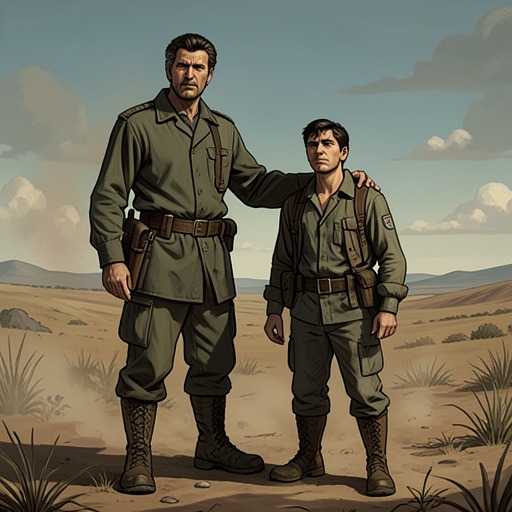
Their time together becomes a pattern of shared work. Phil teaches Peter to ride and gives him a gentle bay horse. They ride into the fields, build pole fences around haystacks, and eat deviled ham sandwiches and apples at midday while Phil tells stories of Bronco Henry. As the season turns colder, Phil still assures Peter that the rope will be finished before he returns to school. Peter says he will remember the time they have spent together. For Phil, this companionship is genuine enjoyment as well as the realization of his earlier design; the relationship is neither simply false nor free of manipulation.
Intimacy, recognition, and divided motives
The relationship deepens through attention as much as instruction. Phil observes Peter closely while he works, and Peter becomes absorbed in Phil’s accounts of the past. During one such conversation, Peter looks toward Sagebrush Hill while thinking about the old days. Phil invites him to imagine exploring together the old trail of rocks Phil found there as a boy. The invitation extends their bond beyond the rope and the immediate routines of ranch work: it offers a shared future activity based on curiosity and memory.
Phil also tries to bring Rose’s drinking into their conversations. He calls it an obstacle Peter must face and asks about his mother’s drinking. Peter admits that he knows she has been drinking through the summer and that she did not used to drink. Phil watches for Peter’s reaction, interpreting a wince at his blunt language as evidence that he has touched a vulnerable subject without driving the boy away. He keeps his manner pleasant, but his earlier plan remains present: he had expected Peter’s separation from his mother to intensify her drinking and strain her marriage to George. Their increasing openness thus develops within a relationship whose apparent care is entangled with Phil’s attempt to use family distress to his advantage.
A decisive change occurs when Peter touches Phil’s arm and offers him rawhide he has cut up himself, explaining that he wants to learn to braid as Phil does and that Phil has been good to him. Phil understands this as more than repayment or practical assistance. He reads Peter’s imitation as a desire to emulate and become like him, and the gesture recalls his own earlier longing for a closeness he had lost. Phil responds by putting an arm around Peter’s shoulders, a gesture of intimacy unusual for him. He promises that matters will be easier for Peter from then on and says he will finish the rope that night. Peter watches as Phil completes it, even though Phil’s hand is freshly wounded.
For Peter, the moment carries a different meaning. His own plan concerning his mother has been taken out of his hands, yet Phil’s kindness makes Peter feel recognized and special. The same gesture can therefore sustain opposing understandings: Phil receives it as the fulfillment of a long-denied emotional attachment, while Peter experiences the affection as part of circumstances that have changed around his mother and his plans. Their bond is real in its effects, but its participants do not share the same knowledge or purpose.
The rope, the secret, and the ending
The finished rope remains the clearest emblem of the relationship’s double character. Phil regards it as the bond that has brought Peter close to him; Peter has learned the craft and has cut additional rawhide of his own. Yet Peter’s knowledge is not limited to Phil’s lessons. In his father’s medical books, he has learned that anthrax can pass from a diseased animal hide into a person’s bloodstream through a cut or break in the skin, including during the braiding of a rope. The craft that Phil offers as a gift and a form of fellowship consequently becomes connected to Peter’s secret means of action.
The relationship ends in a reversal of power. Phil believes that the boy’s attention, imitation, and physical gesture confirm a special bond, and he answers them with trust and affection. Peter, however, possesses knowledge Phil does not recognize as a threat. Phil’s attempt to shape Peter’s loyalties and his attachment to the boy converge in the same object: the rope he has painstakingly made. Peter’s understanding of the danger associated with infected hide transforms that object from a token of mentorship into part of the concealed mechanism behind Phil’s death.
Narrative significance
Phil and Peter’s relationship brings together the novel’s tensions between public judgment and private recognition. Phil first helps the ranch hands mark Peter as an outsider, then recognizes courage in the boy’s refusal to retreat under their ridicule. He offers skills and attention that genuinely draw Peter closer, even as he hopes to use that closeness against Rose. The resulting connection is shaped by both tenderness and calculation, not resolved into either one alone.
The rope condenses this ambiguity into an object whose meaning changes with knowledge. To Phil it is a gift, a lesson in ranch life, and a bond with the boy; to Peter it is also material he understands through medical learning inherited from his father’s books. Their intimacy does not cancel their unequal purposes. Instead, it makes the final reversal possible: Phil mistakes Peter’s responsiveness for a shared future, while Peter’s apparent participation conceals an understanding that Phil lacks.